Saturday, June 27, 2015

Report #2: Gopher Town


Torrington, Alberta, a hamlet located about 160 km northeast of Calgary, is one of the sadder places we visited on our recent rural adventure. Like a lot of tiny rural communities on the prairies, Torrington has seen better days. Many of the buildings are empty or in a state of severe neglect. The hamlet is not a ghost town—yet—but it does feel like it’s dying. The day we were there the streets were deserted, the cashier of town’s only store (Pizza and More, Eh?) wasn’t exactly welcoming, and, despite a few quaint touches such as colorfully painted fire hydrants, the place just generally gave off a depressing vibe.


But Torrington does have one thing going for it: the World Famous Torrington Gopher Hole Museum. Now “museum” is a generous term for this establishment. It’s really a shack containing about two dozen small dioramas of dead, stuffed gophers dressed up in clothes and staged in a variety of humorous, if not bizarre, human endeavours. A pool hall, church, firehall, curling rink, etc. In some cases, the stuffed gophers have been even been given little speech bubbles for comic effect. The dioramas are kitschy, goofy, often hilarious, and, in some cases, just weird. There’s even one freakily postmodern scene involving a gopher-taxidermist.


Wednesday, June 24, 2015

Rural Alberta Adventure Report #1: Donut Mill


All great Alberta adventures include a stop at the Donut Mill.

Albertans know that any trip between Edmonton and Calgary on highway 2 must pass through this legendary institution on Red Deer’s Gasoline Alley on the south edge of the city. The Mill produces some of the finest and freshest donut creations in the west. For many people and families, including my own, it would be inconceivable to drive through Red Deer without stopping in for some treats from the Donut Mill’s case of goodies.

So when the Dusty Musette touring crew was scheming our recent Rural Alberta Adventure route, it made perfect sense for us to kick off our trip from the Mill. We needed a genuine Alberta landmark for our jumping off point, preferably one that could quickly get us onto the gravel roads we were after.  Throw in the possibility of Bismarks and Boston Cremes, and we knew we had our departure point.

Friday, June 12, 2015

In Praise of Crap Bikes


Let’s hear it for the crap bike! The Supercycle! The Infinity! The clunky Schwinn, the rusty Nishiki, the rattly Norco!

These bikes are, for the most part, total horseshit, manufactured out of cheap, heavy materials and bottom end components, then slapped together by department store workers who know nothing about bicycles. In car culture, you’d   call them “beaters”—old, dented, scratched rides that get you from A to B, most of the time, and roll with the understanding that you won’t be spending much money or time on maintenance. When they expire, you just go on kijiji and find a new one.

Yet every cyclist needs a crap bike in the garage. (And the fact that you can store your crap bike in the garage, as opposed to in your house, is just one of the many virtues of the crap bike.)  Crap bikes, for all their undeniable crappiness, are essential. Flashy, expensive, nice bikes are fun to ride, sure, but crap bikes make the cycling world go ‘round.

Thursday, June 4, 2015

Preview: Rural Alberta Adventure


Ten days, 900 km of mostly gravel roads, a southeast squiggle from Red Deer to Medicine Hat, through the Alberta Badlands and around Special Area No. 2 (I know, it sounds like Alberta’s version of Roswell’s Area 51 but it’s actually just an ominously named rural municipality)—that’s the trip Val, Penn, and I will undertake in a little over a week from now.

We’ve been scheming a gravel cycling adventure for some time now, eager to test out what it would be like to tour on dusty back roads. Our very own province of Alberta boasts gravel galore, so why not start close to home? But not too close to home. 

We’ll start in Red Deer, at the Donut Mill, no less—the acknowledged omphalos of Alberta. Our route will take us across prairie and Badlands, through a series of small towns, and across some remote town-less stretches, into a land without espresso. We will follow the Red Deer River for much of the first part of the journey before dipping down along the Saskatchewan border to the Hat.

Here are a few things I’m looking forward to on our rural Alberta adventure:

Sunday, May 24, 2015

Pit Stops: World's Best Climbing Tree


Trees can be a cyclist’s best buds, in so many ways. They provide shade along the roadway, they tell you which way the wind is blowing and how much, and they can even block a nasty headwind. Just the other day, in fact, battling a stiff southeast clipper on the way back from Alberta Beach, we lucked into some roadside groves of aspen trees that provided the perfect wind guard. The effect was remarkable, if short-lived.

(For mountain bikers, the cyclist-tree relationship is a little more complicated, I think. Trees create many of the best trails and provide essential technical features but they can also hurt you and wreck your bike. For road cyclists, however, trees are almost always wholly a good thing.)

And that’s not even counting the aesthetic benefits of trees. They’re beautiful, at any time of year, constantly changing, sometimes smell great, and, I would argue, have a soothing, therapeutic effect on anyone in their immediate presence. If you’re in need of a pit stop on a bike ride, pulling off under a tree is always a splendid idea.

This particular tree in Edmonton’s west end is actually too close to my house to serve as mid-ride pit stop. But I ride past it almost every day, and even after thousands of passes, it can still take my breath away on a spring day, like today, when the blossoms are in full explosion. When my kids were little, my wife and I would walk them down to this pocket park and the boys would clamber all over the low branches. It’s a perfect starter tree—accessible, smooth-barked, with horizontal spots for hanging out. It came to be known as the World’s Best Climbing Tree. We don’t visit the WBCT as often as we once did, but a few weeks back we stopped by, and our teenage boys got right up into the branches, just as they did in those long ago days.

Some trees have a certain magic about them, an old power that fosters relaxation, reflection, imagination, and even regeneration. The WBCT is one of those trees, and as I sit here under its branches writing this, I can feel its ancient energy reminding me that everything grows, blossoms, and eventually sheds its leaves. 

With that counsel from a good friend, I hop back on my bike and continue riding.


Thursday, May 14, 2015

Porcelain Sprocket


What is it with all the toilets?

Riding my bike, I see all manner of trash and treasure along the roadsides, especially at this time of year, but in the past couple of weeks I’ve noticed something really strange: an alarming number of discarded toilets in the ditch.

The one above I spied beside a remote country road south of Edmonton. At first, when I rode by it, I mistook the toilet for a rogue snow drift, which had miraculously resisted the spring melt. But it was too white for spring snow, so I stopped, got off my bike, and took a closer look. The crapper had broken into several chunks, and the parts were scattered in a kind of porecelain splash pattern. On closer inspection, I concluded that this main bowl section may well have been sitting in the ditch for a while, possibly a few years.

Saturday, May 2, 2015

High Desert Postcard


Palm Springs, California—the town that Sonny Bono built—looks to be a fine place for desert road cycling, not that I’ve done much of that in my four days here. This holiday has been about hiking, and the place to do that in these parts is Joshua Tree National Park, about an hour’s drive north of the Coachella Valley, in what the locals call “high desert.”

And high, it truly is, in more ways than one. It’s uphill all the way from Palm Springs, and the temperature up at Joshua is generally between 12-15 degrees cooler. But the vibe up at Joshua Tree is totally chill too. The little town by the park’s main entrance feels like a different planet from Palm Springs. It’s a combination of tourist traps, artist studios, hippy retro shops, espresso joints run by long-bearded hipsters, and an assortment of sun-baked Burning Man-types.

Saturday, April 25, 2015

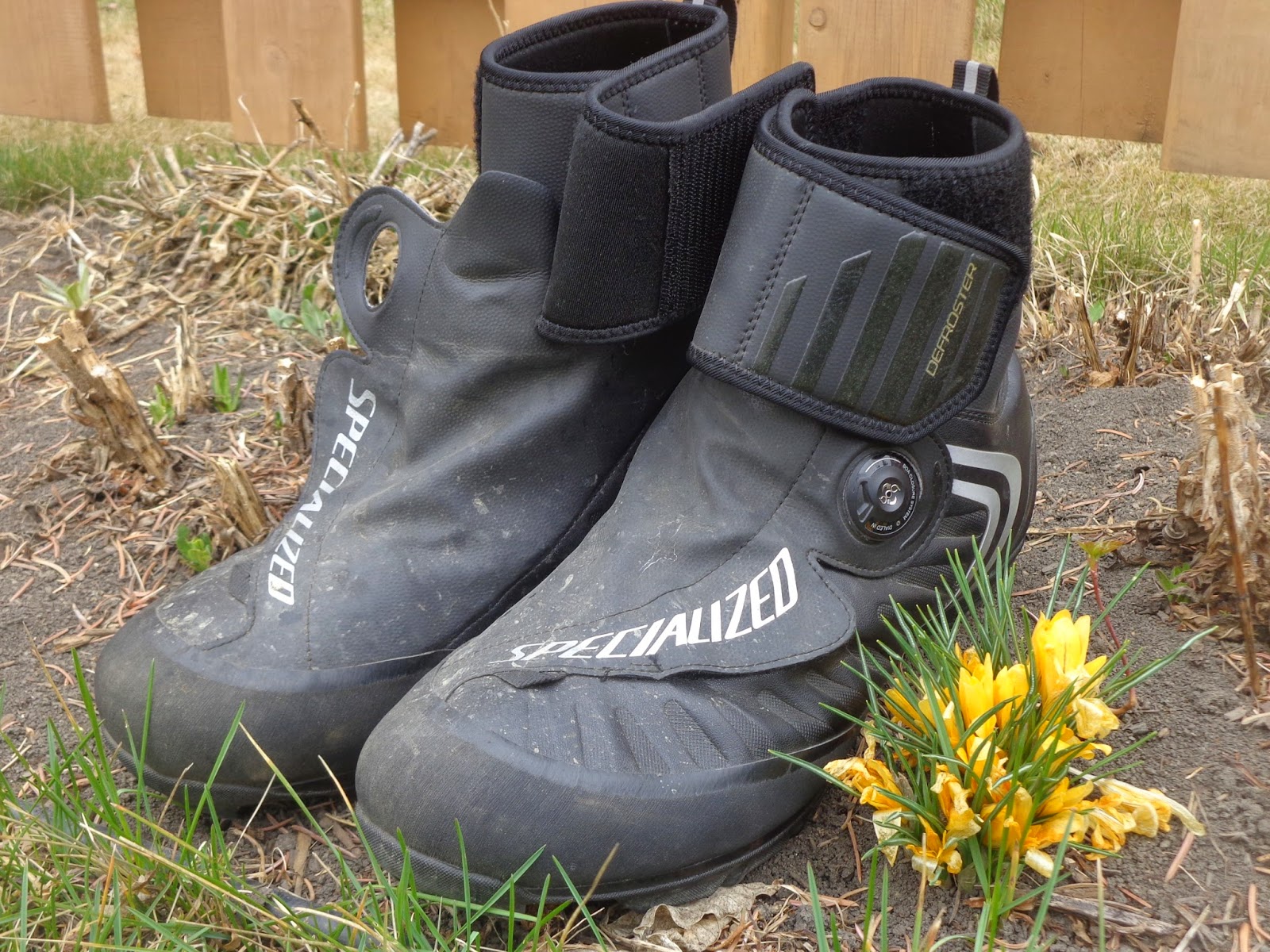
Shoulders and Toes: Specialized Defrosters


These boots have changed my life.

I know that sounds dramatic, but, honestly, I can’t think of another piece of cycling gear that has so profoundly improved my cycling experience. I wore them last autumn and now this spring, and on every single ride I look down at my Defrosters and think, Damn! I love these boots! how did I ever live without them?

Saturday, April 18, 2015

Round the World on a Wheel


When intrepid English bicycle-traveller John Foster Fraser, in the middle of his trans-world bicycle trip in 1896, met with the governor of a province in Persia in 1896, the sultan asked him why Britons were always rushing off to seek out hardship and danger abroad. “There’s no pleasure in it,” offered the puzzled sultan. Fraser replied, simply, “There’s adventure”—as if this were all he needed to say. The sultan shrugged and dismissed Fraser and company as madmen.

Reading Fraser’s classic book about those “adventures,” Round the World on a Wheel (1899), I was struck by how both men were right. So much of Fraser’s journey was full of hardship and danger. It’s tough to comprehend how difficult such a journey would have been: navigating atrocious roads (and sometimes no roads), coping with mechanical breakdowns in remote places, encountering hostile natives (getting pelted with stones becomes such a commonplace event in Asia that Fraser mentions it the way one might mention a rain shower, an unavoidable natural phenomena that will, eventually, pass),  bad food (or no food for days at a time), illness, filthy lodgings, blizzards, wolves and bears and mobs. They travelled with revolvers—and needed them more than once. There were, of course, some moments of pleasure in the trip, but those aren’t what people remember.

Hardship was the cost of “adventure” and Fraser was more than willing to pay the price. It was well worth it, for Fraser and, indirectly, for us.  His book, the last in the original age of around-the-world and trans-continental cycle-travel narratives of the nineteenth century (by rider/writers such as Thomas Stevens, Frank Lenz, Sachtleben and Allen, George B.   Thayer, Hugh Callan) is a highly entertaining account, chalk full of remarkable adventures.   After all these years, it’s still one of the best cycle-travel books out there.