Saturday, February 19, 2022

The Dusty 100 Gravel Challenge 2022


June 5, 2022

The Dusty 100 Gravel Challenge--
Alberta's bugliest gravel event.

Come join us for a day of classic Alberta gravel riding that includes a stretch along the scenic Victoria Trail, exquisite gas-station cuisine, and copious amounts of dust. 

No registration fee. All are welcome: gravel lovers, the gravel-curious, and anyone up for a dusty adventure.

We have two route options:

The Classic Dusty 100-km Route. Bugle call at 9 am. 

And the Li'l Dusty Half Hundred. Bugle call at 11 am.

These routes will be confirmed a week ahead of time, after the Dusty crew recons the situation on the local roads.

Park at the small lot beside the flag poles, one kilometre east of Metis Crossing campground. There's a rustic toilet there (the kind that will do the trick but isn't a place you'd want to linger). But there's no water; bring yer own. 


A few things to know:

This is not a race, though some participants will ride it fast. We usually end up with some fast, medium, and slow groups. 

But know that this is NOT a no-drop ride; in fact, people will almost certainly be dropped, some might get lost, and others will get half way through, wonder why they ever agreed to try this, and seek out a short-cut back to the parking lot.  

RIDERS MUST BE COMPLETELY SELF-SUPPORTED.

No real prizes will be awarded, though we tend to give out a Surprise Bag to the Dustiest Rider. 

Riders will be given a GPX file and, if you want it, an old-school cue sheet--that's all.

There is a lovely Petro Can at Waskatenau at about the 60-km mark. It's got a surprisingly tasty selection of baked goods. That's the only supply point. Most riders stop there for a break.

Ride whatever kind of bike you like but be prepared for a range of gravel conditions, from hardpack to softloam. 

THE DUSTY 100 IS HARD. THAT'S WHY WE CALL IT A CHALLENGE!

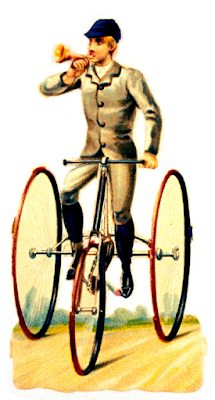
Heed the bugle!


Monday, February 14, 2022

Nice Road

“Nice road,” said Val, with approval, as we–Val, Penn, and I, the Dusty triumvirate–headed up Range Road 20, just north of Township Road 512, southwest of Edmonton. It was an unusually warm winter day, and the roads were nicely packed snow-over-ice. Perfect winter gravel-riding conditions.

I nodded. It was a nice road, at least at that particular spot, and I half-remembered picking it for a reason when I put together this route the night before on RWGPS.

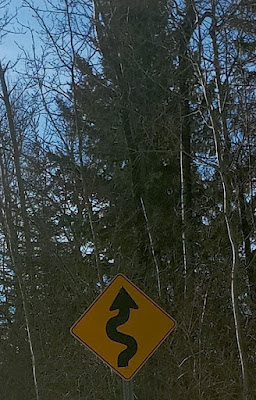
A few seconds later, Val and I laughed as we both realized precisely what made this bit of road so “nice.” It wasn’t straight. That was it! A little slough on some farmer’s property encroached on the perfect grid of roads pushing out a modest bump in the route. The non-straight portion of the road couldn’t have lasted more than a few hundred metres. But that tiny variation, that ever-so-slight bulge in the roadway, qualified as an exotic topographical feature. That’s prairie gravel for you. I have lived here too long.

(I even composed an ironic breathless Alberta Gravel Cycling facebook post I would pen about my discovery: “Man, I found the most amazing gravel road! At first it feels like a regular road but then it, suddenly, like, curves to the left! But that’s not all. Then it swoops back to the right! Awesome!”)

I imagine there are cyclists somewhere–residents of the Alps, maybe?--for whom a ram-rod straight road that runs in a bead to the horizon is an exotic marvel, something to get really fired up about. 

Do Matterhornists dream of grid roads and straight shots the way that I do about switchbacks and squiggles?


Tuesday, January 25, 2022

A Vagabond's Note-Book


   “Of late years I have cycled much and read little.”--Kuklos


W. Fitzwater Wray (1869-1938), who went by the pen-name “Kuklos” (Greek for circle or wheel), was one of the most prolific and accomplished cycling journalists (and cycling personalities, if such a thing can be said to exist) in England in the first three decades of the twentieth century.  His cycling columns in periodicals such as The Daily News, where we worked for decades; his popular series of cycling annuals; and his famed travelling magic-lantern shows about his cycling trips, made him a kind of cycling celebrity in his day.


A Vagabond’s Note-Book (1908) is the first of his three cycling books (the others are the remarkable Across France in Wartime (1916) and The Kuklos Papers (1927)). Note-Book features eleven essays, all of which originally appeared in The Daily News between 1905 and 1907.

Wednesday, December 22, 2021

Higher Calling


“There is nothing that improves a mountain view more than a nice bit of squiggly road going up it.”       --Max Leonard

Higher Calling: Road Cycling’s Obsession with the Mountains (2018) is the kind of wonderful book idea that I almost wish I had thought of myself: exploring the rich tradition and magic associated with ascending mountains on bicycles. Previous books have looked at cycling’s connection with particular peaks (think Peter Cossins’s Alpe d’Huez: The Story of Pro Cycling’s Greatest Climb or Jeremy Whittle’s Ventoux: Sacrifice and Suffering on the Giant of Provence) but British writer Max Leonard, author of the very fine Lanterne Rouge: The Last Man in the Tour de France (2014), and one of the brains behind the Rough Stuff Fellowship Archives, aims much higher. His book offers an ambitious, entertaining, and surprisingly wide-ranging account of our fascination not just with riding up (and down) mountain roads but with mountains in general. 

Friday, October 29, 2021

Graminia Crackseal


I’m embarrassed to admit that I didn’t notice them myself, even though I’ve cycled along that road dozens of times and like to think of myself as having an observant eye. It was actually my dentist pal Joe who pointed them out one day on a road ride: swooshy lines of black tar all along the road surface of Graminia Road, southwest of Edmonton. 

This is a favorite route for Edmonton roadies: newish, well-kept pavement, fairly wide shoulder, and not a lot of car traffic. Any given summer Sunday, you’ll see dozens of cyclists chuffing along Graminia. I wonder how many of them have noticed what I failed to--the work, nay, the masterpiece, of a true crackseal artiste.

Tuesday, October 12, 2021

Cowspiracy at Cooking Lake-Blackfoot

Central Alleyway Trail, heading east

 It took me a while, but I finally figured out that the best time to take your gravel bike out to Cooking Lake-Blackfoot (CLB) is October. This provincial recreation area east of Edmonton and directly south of Elk Island has long featured plenty of intriguing roads and trails that, theoretically, should be of great interest to gravel cyclists. In particular, the east-west-running Central Alleyway Trail (CAT), essentially a gravel road that occasionally devolves into a dirt two-track in places, is, I would argue, one of the most scenic rides in this part of Alberta.

The problem, as any cyclist who’s been there will tell you, is the damn cows. CLB is also a grazing reserve, which means that during the summer, cows pretty much have the run of the place. On a July day, for instance, you’ll encounter cows in the fields, along the edges of the CAT, and often right in the middle of the road. Generally, cows flee at the sight or sound of cyclists, so that’s not the problem. Nor are the copious amounts of cow shit on the road really a problem, except for the most feces-averse among us. (Gotta keep your water bottle spout covered out there.)

Thursday, September 23, 2021

The Joyous Wheel

Happy is the cyclist.

James Arnold’s The Joyous Wheel (1940) is pretty much the perfect embodiment of the literature of the cycling-rambler tradition which was popular in Britain in the first half of the twentieth century. Two-wheeled ramblers like the great "Kuklos" (W. Fitzwater Wray) and Edward Thomas traveled the countryside at a modest but steady pace, seeking out experiences in nature, stopping at points of interest (historical, literary, architectural), partaking of food and beverage at inns and taverns en route, and generally savouring the pleasures of English country life.

These ramblers, almost all of them British, cultivated a very particular aesthetic in their writings about cycle travel. The goal was neither speed nor distance but rather “experiences,” as Arnold says. “Happy is the cyclist who rides throughout the year, taking what comes his way in weather, choosing only his itinerary.” Stalwart, unflappable, optimistic, the rambler pedals on, seeking subtle contact with the rustic world.

Arnold’s slim book (133 pages, including his own exquisite black and white illustrations) recounts his cycling adventures during the 1930s in and around the landscape of the Cotswolds, west of London. A “seasoned Woldsman,” as he refers to himself, he rattles off the names of the villages he passes through on his rides--Shrewston, Tilshead, Wantage, Stow, Burford--like a kind of geographical rosary. Some of these place names sound totally made up: Wooton Fitzpayne, Buttermere, Abden Burf, Uphusband. And my favorite: Lord Hereford’s Knob. The weird poetry of these names isn’t lost on Arnold; in fact, he says that sometimes he altered his routes just for them. “These names lured me and did not let me down.”