Saturday, April 25, 2015

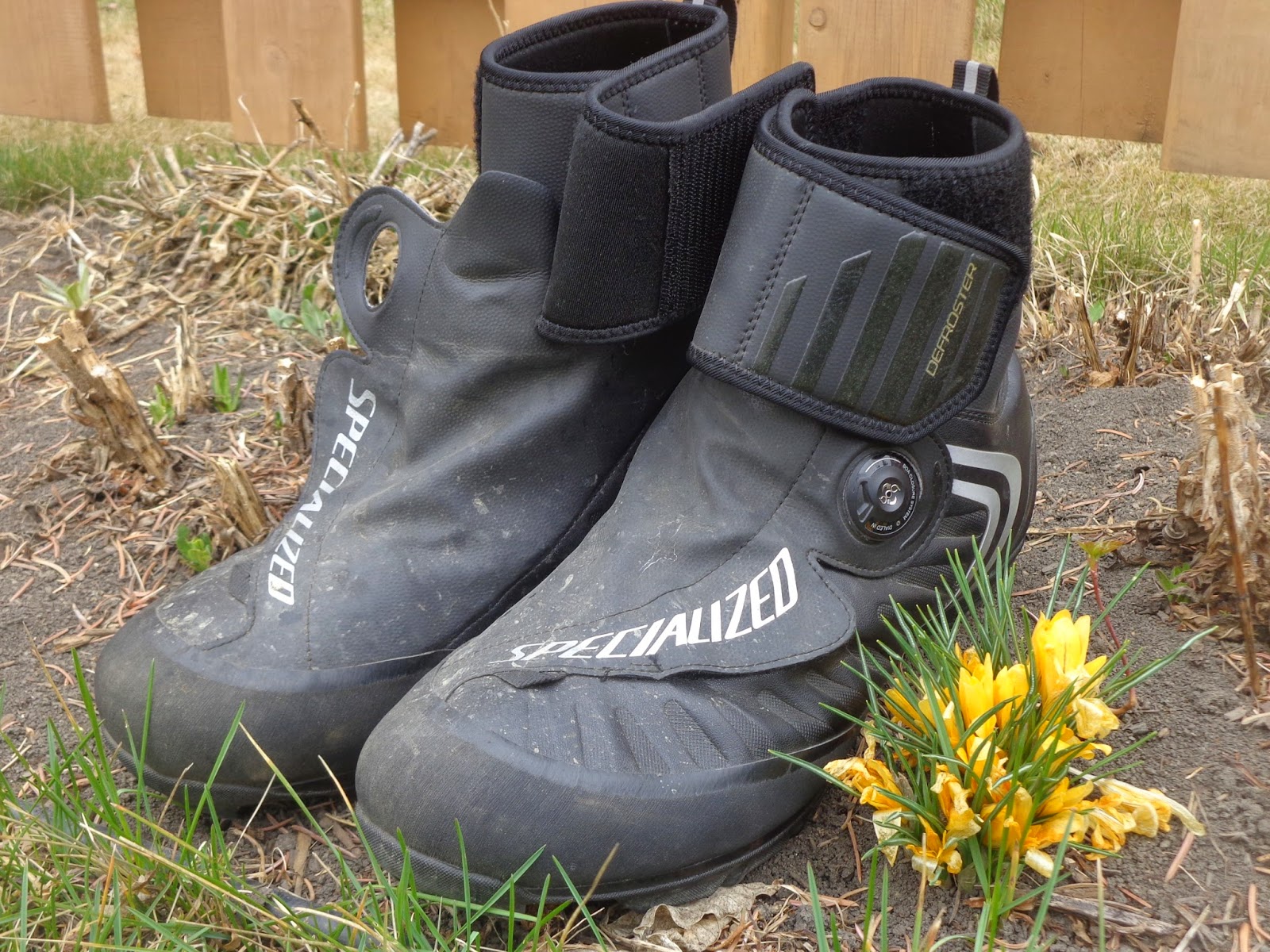
Shoulders and Toes: Specialized Defrosters


These boots have changed my life.

I know that sounds dramatic, but, honestly, I can’t think of another piece of cycling gear that has so profoundly improved my cycling experience. I wore them last autumn and now this spring, and on every single ride I look down at my Defrosters and think, Damn! I love these boots! how did I ever live without them?

Saturday, April 18, 2015

Round the World on a Wheel


When intrepid English bicycle-traveller John Foster Fraser, in the middle of his trans-world bicycle trip in 1896, met with the governor of a province in Persia in 1896, the sultan asked him why Britons were always rushing off to seek out hardship and danger abroad. “There’s no pleasure in it,” offered the puzzled sultan. Fraser replied, simply, “There’s adventure”—as if this were all he needed to say. The sultan shrugged and dismissed Fraser and company as madmen.

Reading Fraser’s classic book about those “adventures,” Round the World on a Wheel (1899), I was struck by how both men were right. So much of Fraser’s journey was full of hardship and danger. It’s tough to comprehend how difficult such a journey would have been: navigating atrocious roads (and sometimes no roads), coping with mechanical breakdowns in remote places, encountering hostile natives (getting pelted with stones becomes such a commonplace event in Asia that Fraser mentions it the way one might mention a rain shower, an unavoidable natural phenomena that will, eventually, pass),  bad food (or no food for days at a time), illness, filthy lodgings, blizzards, wolves and bears and mobs. They travelled with revolvers—and needed them more than once. There were, of course, some moments of pleasure in the trip, but those aren’t what people remember.

Hardship was the cost of “adventure” and Fraser was more than willing to pay the price. It was well worth it, for Fraser and, indirectly, for us.  His book, the last in the original age of around-the-world and trans-continental cycle-travel narratives of the nineteenth century (by rider/writers such as Thomas Stevens, Frank Lenz, Sachtleben and Allen, George B.   Thayer, Hugh Callan) is a highly entertaining account, chalk full of remarkable adventures.   After all these years, it’s still one of the best cycle-travel books out there.
Friday, April 10, 2015

Orphan Glove


People love to complain about dog shit in the spring time. As the glacial drifts recede from sidewalks and streets, and the detritus of the past five months slowly emerges, once-frozen dog turds shed their icy cocoons and come back to a mushy, pungent second life.

But spring cyclists don’t care about such things. When they look down, they notice other seasonal phenomena, namely the spectacularly shitty state of roads at this time of year, all gravelly, sandy, potholed, and litter strewn. It can make for a grim scene, all that flotsam along the shoulders. For me, though, a sure sign of spring is the ubiquitous orphan glove on the side of the road.  

Saturday, March 28, 2015

Bicycletiquette: Natural Breaks


Dear Bicycletiquette,

What is the proper protocol for peeing mid-ride? Is it okay to pee on the side of the road? Just how discreet should a cyclist be?

Sincerely,
Pee Protocoler

Dear PP,

That depends on what kind of cyclist you are. Exactly how and where a cyclist pees reveals much.

In the 1950s, when the great Fausto Coppi was the padrone of the peloton, he had a pet peeve about the indelicacy of his fellow cyclists whizzing on the side of the road. It drove him bananas. European pro riders in those days felt like they owned the roads and, therefore, were entitled to mark their territory freely, letting ‘er fly while standing over their bike frames on the edge of the roadway. The surprisingly prudish Coppi saw such behavior as gauche, juvenile, really, and beneath the dignity of respectable professionals. He insisted that his team, at least, be more discreet, dismounting and seeking out some leafy privacy before heeding the call of nature.  

Saturday, March 14, 2015

Winter Gravel


A few weeks back, Val, Penn, and I fled the city on a Sunday morning and took to the gravel of the Glory Hills west of Edmonton.  We rolled our fat steeds along frozen back roads under a brilliant, cold sky. We encountered five cars and three deer in our 30 km. It was a glorious ride, indeed.

Now, we all know that gravel-road cycling is on the verge of becoming a thing—all the big manufacturers are putting out gravel bikes and gravel events are popping up like dust devils across the Midwest and elsewhere. The benefits of gravel riding have been extolled by me and others for some time—namely the lack of car traffic and the almost endless route possibilities. But winter gravel? Could it be a sub-thing of that gravel thing?

Friday, March 6, 2015

The Night Bridge


I’ve only got one rule for a night ride these days: it’s got to include a crossing of the night bridge.

That’s what I’ve taken to calling Edmonton’s High Level bridge since July 1, 2014, when 60000 LED lights fired up and the 100-year-old bridge was transformed into a spectacle of color. The Light the Bridge project was the result of a creative fund-raising campaign that saw no public money spent on the lights—citizens and businesses “bought” bulbs (though the city now pays for the electricity to keep them running.) The project led to a healthy discussion of the benefits of large-scale aesthetic projects like this—whether fancying up civic infrastructure, essentially transforming a utilitarian structure into a work of art, is a worthwhile undertaking.

Friday, February 27, 2015

Under Pressure


Val keeps telling me to let air out of my fat bike tires. While I’m still pretty new to the fat bike, Val’s been riding his longer and follows what fat bikers say on the forums. He says that the serious fat bikers all claim that playing around with tire pressure is key to maximizing the fat bike experience.

On an intellectual level, sure, I understand how this works. Lower air pressure increases the surface area of the tire, providing better traction in soft conditions like, say, snow. I get the science of it. But the long-time roadie in me still has trouble letting air out of those valves. I’m so used to riding on hard tires and associating low tire pressure with inefficiency that I’m having difficulty adjusting to this new way of thinking. I know I should try it but I haven’t much.

Tuesday, February 17, 2015

Bugle Lessons


A horn or bugle is used on club runs and at meets to give signals for concerted action; the lightest and simplest construction being preferred.

--Charles E. Pratt, The American Bicycler: A Manual for the Observer, the Learner, and the Expert. (1879)

I once wrote a half-serious post about wanting a cycling bugle for Christmas. Well, it took a few years, but my wish came true this past December. My wife gave me this fine specimen, made in India (?!). It’s the real deal, shiny and solid, a military-style cavalry bugle of the kind used by nineteenth-century cycling clubs to call out signals to riders. I love it. It sits on the piano in my living room, and has sparked numerous, usually short, conversations.  (A cycling bugle? Oh.) Now I just have to figure out how to play it.

Friday, February 6, 2015

Brown Sugar Blues


Shimmy, shimmy sugar—SHIT!
February slush-squish, root beer Slurpee, mashed potatoes
with gravy

What is this crap?

Front tire side-swerves, back tire spin-slips
You look so soft, your mish-mush patches of plantation raw—
Or is it demerara, turbinado, or dark muscovado?

I won’t be fooled by your sweetie-pie schtick
You are sweet misery on asphalt
Bastard child of global warming and half-assed snow plowing
Succubus of slirt
Take my eyes off you and I’m down for one lump, maybe two

Give me a meringue of snow drifts
Give me a skating rink of a road
Give me an archipelago of potholes

But—ENOUGH with this brown sugar!

How can something that looks so sweet suck so bad?